Algebra of Ecology
Keywords:
PCA, Hordeum vulgar, phenotypic diversity - heat stress index HI, heatmap analysisAbstract
This monograph examines issues that serve as theoretical prerequisites for constructing an algebra of ecology. These issues include: basic concepts; interactions of ecological factors; a formal definition of the ecological niche; the group-theoretical relationship of survival coefficient functions; and certain representations of the group. It also explores a variety of information models and ecological survival fields.
The results of investigating the aforementioned issues provide a basis for the following assertions:
Ecological factors are, first, diverse (potentially unlimited) changing natural forces; second, the adaptive responses of biological objects to the impact of ecological factors constitute their survivability; third, the influence of environmental factors on individuals within a population should be considered through the concept of survival functions; fourth, despite the potentially infinite variety of ecological factors, their corresponding survival coefficient functions can be classified into six types.
The interaction of environmental factors forms a kind of survivability hypervolume, created by the interaction of survival coefficient functions corresponding to the ecological factors of the environment.
References
I.S. Alekseev (1978) Symmetry, invariance, reality. 47.
Arthur Conan Doyle (1986) Red on white. 464.
I.A. Achurkin (1978) Symmetry as a principle of dynamic unification of physics. 47.
M. Bigon, J. Harper, K. Townsend (1989) Ecology. Individuals, populations and communities. 2, 427.
V.N. Burov (1968) Population density as a factor in population dynamics. 47(10), 1145.
G. Weil (1968) Symmetry. 191.
G.A. Viktorov (1969) Mechanisms of regulation of insect numbers. 37.
G.A. Viktorov (1971) Trophic and synthetic theory of insect population dynamics. 50(3), 361.
M.I. Gulamov (1982) About one simulation model of the host-parasite type. 836.
M.I. Gulamov, V.P. Pasekov (1985) Simulation model of the parasite-host system (parasite-winter moth). 44.
M.I. Gulamov (1986) Simulation model of the parasite-host system: parasite – winter moth (cotton pest). 24.
M.I. Gulamov (1989) Qualitative study of survival mechanisms of individuals of insect population. (4(117)), 39.
M.I. Gulamov, V.A. Fayziev (1990) Study of group properties of survival coefficients of insect populations. 52.
M.I. Gulamov (1991) On the interaction of environmental factors. 36.
M.I. Gulamov, V.A. Fayziev (1992) Theoretical group study of survival rates of insect populations. 1(1), 20.
M.I. Gulamov (1994) On the interaction of environmental factors. 97.
M.I. Gulamov (1995) Applied issues of the theory of interaction of environmental factors. (151), 127-133.
M.I. Gulamov (1996) On one problem of theoretical ecology. (4), 45.
M.I. Gulamov (1997) Mathematical description of the interaction of environmental factors. 2, 13.
M.I. Gulamov, Sh.Kh. Khoshimov (1997) On the theory of symmetry of survival rates. (4), 16.
M.I. Gulamov, D.O. Logofet (1997) On the interaction of environmental factors. (1), 64.
M.I. Gulamov (2002) A new approach to formalizing an ecological niche. 36.
M.I. Gulamov (2004) The concept of interaction of environmental factors. (5), 173-188.
M.I. Gulamov, A.T. Terekhin (2004) On one generalization of Hutchinson's definition of ecological niche. (1 (10)), 19-26.
M.I. Gulamov (2006) On the method of calculating the interaction of environmental factors. (1), 93.
M.I. Gulamov, V.S. Krasnov (2009) Theory of interaction of environmental factors. 64.
M.I. Gulamov (2012) Group-theoretical approach to the study of the interaction of environmental factors. 21(1), 1-9.
M.I. Gulamov (2012) Theory of interaction of environmental factors. 94.
M.I. Gulamov (2016) Reflections on the nature of diversity. http://7universum.com/ru/nature/archive/item/2489
M.I. Gulamov (2017) On the nature of diversity renewal. http://7universum.com/ru/nature/archive/item/5124
M.I. Gulamov (2018) On the nature of “materialization” of information models. http://7universum.com/ru/nature/archive/item/5797
M.I. Gulamov (2020) On the set of information models. http://7universum.com/ru/tech/archive/item/9341
M.I. Gulamov (2021) On generalized operations of a set of information models. (1(82)). http://7universum.com/ru/tech/archive/item/11173
M.I. Gulamov (2021) On the concept of “Ecological field of survival”. 6(84). https://7universum.com/ru/nature/archive/item/11707
P. Giller (1988) Community structure and ecological niche. 184.
P.A. Zade (1976) The concept of a linguistic variable and its applications. 214.
G.E. Zaikov, S.A. Maslov, V.L. Rubailo (1991) Acidic rain and the environment. 141.
Ya.B. Zeldovich, M.Yu. Khlopov (1988) The drama of ideas in the knowledge of nature. 240.
B.G. Johannsen (1964) Basic laws of population dynamics. 42.
A.S. Isaev, R.G. Khlebopros (1973) The principle of stability in the dynamics of the number of forest insects. 208(1), 225.
P. Kemp, K. Arms (1989) Introduction to biology. 671.
M. Klein (1984) MATHEMATICS Loss of certainty. 448.
G.Ya. Lubarsky (1986) Group theory and physics. 224.
Yu.V. Prokhorova (1988) Mathematical Encyclopedic Dictionary. 849.
A.B. Migdal (1983) Search for truth. 240.
A.B. Migdal (1989) Quantum physics for big and small. 140.
N.I. Nikolaikin, N.E. Nikolaikina, O.P. Melikhova (2003) Ecology (textbook). 622.
Yu. Odum (1986) Ecology. T.1, 328.
S.V. Petukhov (1988) Geometries of living nature and algorithms of self-organization. 48.
E. Pianka (1981) Evolutionary ecology. 391.
E.N. Polivanova, T.A. Triseleva (1988) Effect of larval density on adjacent bodies of the harmful turtle – EURYGASTER INTERGRICERS (HETROPTERA). 67(8), 1162.
V.S. Raneckles (1988) The effect of a mixture of atmospheric pollutants on a plant. 273.
S.P. Rasnitsyn, L.B. Volkova (1982) Analysis of the group effect using AEDES mosquito larvae as an example AEGYPTI (DIPTERA, CULICIDAE). 4, 73.
R. Ricklefs (1979) Fundamentals of General Ecology. 424 p..
F.N. Semevsky, S.M. Semenov (1982) Mathematical modeling of environmental processes. 280 p..
V.I. Smirnov (1974) Course in higher mathematics. 2, 655 p..
A.S. Sonin (1987) Attaining perfection. 207 p..
L. Tarasov (1982) This amazingly symmetrical world. 172 p..
R. Feynman (1987) The nature of physical laws. 160 p..
E. Fried (1979) An elementary introduction to abstract algebra. 264 p..
E.I. Khlebosolov (1999) Ecological factors of speciation. 284 p..
A.A. Sharov (1985) Principles of analysis of interacting factors of population dynamics. 46(5), 590.
A.A. Sharov (1989) Life system of the population – new possibilities of the old concept. 50(3), 293.
I.I. Shafransky (1985) Symmetry in nature. 168 p..
A. Shileiko, T. Shileiko (1983) Information or intuition?. 208 p..
I.A. Shilov (1985) Physiological ecology of animals. 329 p..
V.V. Yakhontov (1969) Ecology of insects. 459 p..
R.P. Anderson, A.T. Peterson, M. Gomez-Laverde (2002) Using niche – based GIS modeling to test geographic predictions of competitive exclusion and competitive release in South American pocket mice. 98(1), 3-16.
MI Gulamov, DO Logofet (1997) Towards the Interaction of Environmental Factors. 24(1), 54-58.
A.H. Hirzel, J. Hausser, D. Chessel, N. Perin (2002) Ecological – niche factor analysis: How to compute habitat – suitability maps without absence date?. 83(7), 2027-2036.
LY Hou, AC Hill, A. Solemani (1977) Influence of CO_{2} on the effects of SO_{2} and ON_{2} on Alfalfa. 12, 7.
GE Hutchinson (1959) Homage to Saints Rosalie, are when the so many kinds of animals?. 93, 145-159.
GE Hutchinson (1978) An Introduction to Population. 260 p..
GE Hutchinson (1991) Population studies: animal ecology and demography. 53, 193-208.
B K Lim, A T Peterson, M D Engstrom (2002) Robustness of ecological niche modeling algorithms for mammals in Guyana. 11(7), 1237-1246.
J Lindstrom, E Ranta, H Kokko, P Lundberg, V Kaitala (2001) From arctic lemmings to adaptive dynamics: Charles Elton's legacy in population ecology. 76(1), 129-158.
R H MacArthur (1961) Population effects natural selection. 95, 195-199.
R H MacArthur, E R Pianka (1966) On optimal use of a patchy environment. 100, 603-609.
R H MacArthur, R Levins (1967) The limiting similarity, convergence and divergence of coexisting species. 101, 377-389.
R H MacArthur, E O Wilson (1967) The theory of island biogeography. 203.
R H MacArthur (1968) The theory of the niche. 159-176.
R H MacArthur (1970) Species pacing and competitive for many species. 1, 1-11.
R H MacArthur (1972) Geographical ecology: patterns in the distribution of species. 269.
A T Peterson (2001) Predicting species' geographic distributions based on ecological niche modeling. 103(3), 599-605.
A T Peterson, L G Ball, K P Cohoon (2002) Predicting distributions of Mexican birds using ecological niche modeling methods. 144(1), 27-32.
J H Shinn, B R Clegg, M L Stuart, S E Thompson (1976) Exposure of field-grown Lettuce to geothermal air pollution: Photosynthetic and stomata responses. A111, 603.
R M Sibly, J Hone (2002) Population growth rate and its determinants: an overview. 357(1425), 1153-1170.
C Streffer, J Bucker, A Consier (2003) Environmental Standards Combined Exposures and Their Effects on Human Being and Their Environment. 407.
D T Tingey, R A Reinert (1975) The effect of ozone and sulfur dioxide singly and in combination on plant growth. 9, 117.
Information model. https://ru.wikipedia.org/wiki/Информационная_модель
Iconic models, informational examples and diagrams, types. http://best-exam.ru/znakovie-models/
Images for the query 'DNA structure'. http://berl.ru/article/kletka/dnk/
DNA. Structure and composition of DNA. Properties of DNA. http://medicalplanet.su/genetica/27.html
Structure of galaxies. Collected papers. http://com.ua/ru/. (incomplete URL, likely truncated)
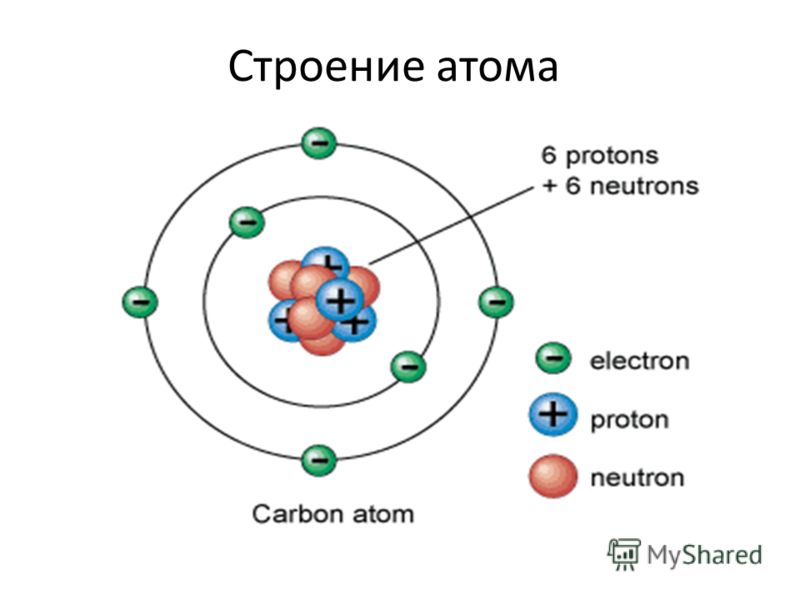
Structure of the atom. http://images.myshared.ru/4/319832/slide_1.jpg
Field_(physics). https://ru.wikipedia.org/wiki/Field_(physics)
Tory groups and physics; Yang Theory. https://ru.wikipedia.org/wiki/Yang_Theory
Downloads
Published
Issue
Section
License
Copyright (c) 2025 Authors and Global Journals Private Limited

This work is licensed under a Creative Commons Attribution 4.0 International License.