Marketing Metamorphosis: Bridging Traditional and Digital Sales Strategies in the Tech-Driven Age
Keywords:
Challenges, data protection, Somali Petroleum Authority, International oil companies, Somali National Oil Company, National Oil Companies, digital transformation, Integrated Marketing Strategy, Consumer Engagement, Sales Innovation, Tech-Driven MarketingAbstract
From the billboard to the byte, from the handshake to the hyperlink, marketing has changed drastically in the vast theater of 21st-century business. This research article explores the dynamic juxtaposition and convergence of conventional and digital marketing and sales techniques, therefore highlighting the tectonic changes in customer involvement, campaign orchestration, and technology mediation. Influencer marketing, CRM automation, and influencer marketing as business ecosystems migrate from the analog inertia of print advertisements and field sales into the turbulent digital storm of AI-driven analytics necessitate not just adaptation but also change from the toolset perspective. This study seeks to outline the philosophical undercurrents, historical background, and technical progress that have collectively rewritten the marketing playbook, therefore acting as a compass for contemporary professionals—an intellectual ready reckoner.
In its golden age, traditional marketing depended on wide brushstrokes—mass communications across stationary media like print, radio, and television. Designed to mesmerize the collective consciousness, the campaign was monologic, one-directional. Newspapers column inches, the famous tagline, the television jingle—they were the currency of credibility. Their philosophy rested on emotional resonance, persuasion, and aspirational identity. These approaches were sometimes castles constructed on sand—grand in intention but precarious in responsibility—limited capacity for feedback, and measures based more on intuition than evidence.
Now enter the digital era, and the marketing landscape changed like molten lava cooling into fresh lines. Digital marketing presented to the customer a mirror—responsive, reflecting, and sharp. The traditional marketing order was disrupted when email marketing, SEO, social media platforms, artificial intelligence-powered analytics, and real-time participation arose. From fixed broadcasts, campaigns changed into dynamic interactions in which algorithms whispered insights and milliseconds evaluated participation. The speech evolved into a discussion, the broad pitch gave way to micro-targeted narrative, and data helped to dethroness intuition.
By use of numerous axes—audience reach, cost structure, engagement philosophy, customization depth, communication dynamics, and technology enablers—this study explores the relative architecture of conventional and digital marketing. It compares the non-linear, convoluted buyer path of today with the once-linear sales funnel. From relationship-centric field sales to digitally fluid social selling, where artificial intelligence scores leads, chatbots foster interest, and predictive analytics anticipate customer needs even before they are expressed, the research questions this viewpoint.
Likewise important is the conceptual framework supporting this transformation of marketing. Rooted in a mass-psychology paradigm influenced by economic models of supply and demand, enhanced by cultural motifs, and driven by aspirational storylines, is traditional marketing. It grew best on monolithic branding and consistent message. Conversely, digital marketing comes out of the hyper-personalisation paradigm—nimble, fractal, and influenced by behavioral psychographics. Here, co-authored by people, carefully chosen in real-time, and sensitive to emotion, narrative is not a script but a mosaic.
From the post-industrial consumption boom to the aspirational consumer of the 20th century, this research also examines the financial, psychological, and sociological elements defining the roots of conventional marketing. It then graphs the emergence of digital disruptors, highlighting events such the release of Google AdWords, the climb of social media, and the inclusion of artificial intelligence into consumer service, content production, and campaign management. Every one of these developments is more of a jump into a marketing multiverse where the buyer’s path is nonlinear, multichannel, and always changing than a step forward.
A key part of the article examines how the digital revolution has caused a cognitive and operational rewiring of marketing strategy, therefore transcending simple tool or platform change. Data is now a real-time dashboard driving strategy, innovation, and budget allocation, not a retroactive report card. The article looks at how technologies such CRM systems, artificial intelligence-driven chatbots, AR/VR interfaces, and blockchain-based verification have changed the connection between marketer trust, immediacy, and immersion.
Likewise, the report emphasizes in certain situations—be it rural outreach, premium branding, or experiential campaigns—the ongoing importance of conventional marketing methods. Trade exhibits, direct mailings, in-person presentations, and brand jingles still have impact, particularly in areas or demographics where tactile confidence dominates digital dazzle. The study supports a hybrid paradigm, a symphonic mix in which digital rhythms of automation, scalability, and analytics harmonises with classical virtues of customization, believability, and human touch.
Furthermore, investigated in terms of sales architecture is this hybridisation. With its reliance on human intuition, relationship-building, and verbal persuasion, traditional field sales contrasts with the digital speed of social selling—where value propositions are algorithmically tailored, leads are scored by artificial intelligence, and customer relationships are managed through dashboards. The report suggests a confluence: a sales approach embracing the accuracy of tech-enabled interaction but keeping the subtlety of face-to–face persuasion.
Content ideation and narrative are yet another important question this study begs. Content in old marketing was static, defined by copywriters and distributed via set routes. Content in digital marketing is polyphonic, live, alive. Users create it; algorithms curate it; it runs on blogs and podcasts as well as on Twitter threads, TikHub reels. Now, tools like Canva, Figma, and Lumen5 enable even non-designers to create striking images and films, hence democratizing content production and blurring the line between producer and consumer.
This paper also looks at marketing as an open-ended experience ecosystem rather than as a closed-loop transaction. Omni-channel approaches, user-generated content, and influencer marketing are rewriting the brand-consumer relationship into a cooperative narrative in which relatability outshines glamor and authenticity overcomes perfection. This demands a change in perspective from campaign thinking to community development from ROI to resonance.
By combining these multifaceted concepts, the paper offers a complete framework for contemporary marketers—a pragmatic but philosophical manual that fits strategy with technology, creativity with data, and tradition with innovation. It exhorts marketers to become navigators of paradox: to honor heritage while embracing innovation, to tell tales while crunching figures, and to create connections in a society progressively mediated by code.
This study ultimately supports an adaptable, integrated marketing strategy wherein the canvas of tradition and the brushstrokes of innovation join together to create a masterwork of relevance, authenticity, and effect. In this age of marketing metamorphosis—where brands are both broadcasters and listeners, both symbols and influencers—the marketer is no more just a communicator but a mapper of meaning in a marketplace without boundaries.
References
Lyndon Simkin (2013) To boardrooms and sustainability: the changing nature of segmentation. https://core.ac.uk/download/187087278.pdf
Katrien Berte, Tom Evens (2014) Challenges of digital innovations: a set-top box based approach. https://core.ac.uk/download/55809963.pdf
Felipe Caro, A Gurhan Kok, Victor Martinez-de-Albeniz (2020) The Future of Retail Operations. https://core.ac.uk/download/323311210.pdf
F Buttle J Becker, J Luftman, J Luftman, J Luftman, J Luftman, JC Henderson, et al. (2019) A model to assess customer alignment through customer experience concepts. http://arxiv.org/abs/1905.02356
Terry N. Barr (2025) INDUSTRIALIZATION OF AGRICULTURE OR A REALIGNMENT OF THE FOOD AND AGRICULTURAL SYSTEM?. https://core.ac.uk/download/pdf/7052053.pdf
Tony Garry, Tracy Harwood (2019) Cyborgs as Frontline Service Employees: A Research Agenda. https://core.ac.uk/download/228181962.pdf
Hesham O. Dinana (2019) Insight-Driven Sales Management. https://core.ac.uk/download/322441517.pdf
Tereza Suchanová (2024) Digital marketing using Artificial Intelligence for educational institutions. https://core.ac.uk/download/638722183.pdf
Moira Clark, N. Perkins (2012) Multichannel in a complex world. https://core.ac.uk/download/187087272.pdf
David Bowie, Anastasia Mariussen, Alexandros Paraskevas (2014) Technology-driven online marketing performance measurement: lessons from affiliate marketing. https://core.ac.uk/download/46598161.pdf
Brett R Gordon, Kinshuk Jerath, Zsolt Katona, et al. (2020) Inefficiencies in Digital Advertising Markets. https://core.ac.uk/download/322493827.pdf
Adele PARMENTOLA (2025) The Internationalization of Chinese Companies: Are the Traditional Resource Based Theories Valid Yet?. https://core.ac.uk/download/pdf/6314804.pdf
Bruce Katz Julie Wagner (2014) The Rise of Innovation Districts: A New Geography of Innovation in America. https://core.ac.uk/download/75778023.pdf
Gillian Doyle (2016) Resistance of channels: television distribution in the multiplatform era. https://core.ac.uk/download/42363254.pdf
Malin Vesterback (2024) E-commerce Market Entry: Opportunities and Challenges for Finnish Microbusinesses in the Swedish Market. https://core.ac.uk/download/638723378.pdf
Hsiang An Hu, Jongki Kim, Jian Mou, Tseng et al. (2023) From adoption to adaptation: Bridging digital transformation and AI integration in contemporary SMEs. https://core.ac.uk/download/599100439.pdf
Pascale Berranger (2025) The adoption of e-business technology by SMEs. https://core.ac.uk/download/pdf/6937044.pdf
Chiara Colombi, Erminia D'Itria (2023) Fashion Digital Transformation: Innovating Business Models toward Circular Economy and Sustainability. https://core.ac.uk/download/558772508.pdf
MARIANNA TOROSYAN (2024) Redesigning Luxury Brand Organizations: Hybrid Jobs and Inclusivity. https://core.ac.uk/download/636341828.pdf
Olivier Serrat (2015) Knowledge Collaboration: Working with Data and Web Specialists. https://core.ac.uk/download/33611545.pdf
Clara Alexandra Simões Dias (2024) The Cases of Ponta Delgada and Beijing Capital International Airports. https://core.ac.uk/download/639872786.pdf
Ryan Christopher Gurley (2021) Strategies for Implementing Self-service Technologies in Supermarket Retail Operations. https://core.ac.uk/download/428367913.pdf
Michael Cork, David Curtis, Pamela Edwards, Joughin et al. (2001) Developing strategic learning alliances: partnerships for the provision of global education and training solutions. https://core.ac.uk/download/14097.pdf
Owen Darbishire, Mark Lehrer (2025) The performance of economic institutions in a dynamic environment: air transport and telecommunications in Germany and Britain. https://core.ac.uk/download/pdf/6588410.pdf
Tom Schiefer (2024) Innovation unchained: Collaboration and data analytics for novel digital products and services. https://core.ac.uk/download/620781945.pdf
Andrea Tenucci, Lino Cinquini (2025) Management Accounting for Service: A Research Agenda. https://core.ac.uk/download/pdf/6423618.pdf
M. van Birgelen, A. Jong, K. de Ruyter, et al. Wetzels (2025) Customer evaluations of after-sales service contact modes: An empirical analysis of national culture's consequences. https://core.ac.uk/download/pdf/6501248.pdf
J Bolfek-Radovani, G Briscoe, M Dima, et al. (2014) London Creative and Digital Fusion. https://core.ac.uk/download/30697507.pdf
Ricardo David Francisco (2023) From data to innovation: empowering sustainable new product development with AI and data science : insights from Portuguese industries. https://core.ac.uk/download/591324996.pdf
Lise Escal (2024) Building brand love through AR & VR experiences in retail: customer perspective. https://core.ac.uk/download/630299211.pdf
Daniel Palacios Marqués, Domingo Ribeiro-Soriano, Jose Ramon Saura (2021) Setting B2B digital marketing in artificial intelligence-based CRMs: A review and directions for future research. https://riunet.upv.es/bitstream/10251/181222/1/SauraRibeiro-SorianoPalacios%20-%20Setting%20B2B%20digital%20marketing%20in%20artificial%20intelligence-based%20CRM....pdf
Alexandra Niemi (2017) Digital kundanskaffning: ett holistiskt tillvägagångssätt. https://core.ac.uk/download/92854908.pdf
Saerom Lee, J. Daniel Kim (2024) When do startups scale? Large-scale evidence from job postings. https://doi.org/10.1002/smj.3596
Nikolay Brutyan (2023) Marketing Strategies in Web3: Exploring Transformation of Decentralized Landscape. https://core.ac.uk/download/595815480.pdf
Trisha T. C. Lin (2025) Media fusion and future TV: Examining multi-screen TV convergence in Singapore. https://core.ac.uk/download/pdf/6505031.pdf
Brooke Elizabeth Auxier (2012) SOCIAL MEDIA INSTRUCTION IN JOURNALISM AND MASS COMMUNICATIONS HIGHER EDUCATION. https://core.ac.uk/download/56109496.pdf
Hani Sami Ahmad Hammoud, Mohamad Arafeh, Mohamad Wazzeh, Sarhad Arisdakessian, Mario Chahoud, Osama Wehbi (2024) The Metaverse: Survey, Trends, Novel Pipeline Ecosystem & Future Directions. https://doi.org/10.1109/comst.2024.3392642
Sujanya Tubtong Thanachit Rodpan (2023) Digital Marketers for Attitudes and Purchase Intentions Towards Modern Personalized Cosmetics, Impact of Manufacturing and Engineering Technology Management. https://doi.org/10.52783/tjjpt.v44.i3.533
Daniel Estabrook (2011) Co-creative pricing (CCP): a conceptual development of consumers' participation in pricing practicing in services. https://core.ac.uk/download/30083485.pdf
Lynn University (2007) 2007-2008 Lynn University Academic Catalog. https://core.ac.uk/download/228449943.pdf
Annika Salmi (2020) Artificial Intelligence Enabled Solutions in Marketing: Case Ekokompassi. https://core.ac.uk/download/294817334.pdf
Veronica Provasi (2023) The A.I. revolution: evaluating impact and consequences in copywriting. https://core.ac.uk/download/614522031.pdf
Lars Arvei Moen (2024) Strategy and Digital Transformation: Exploring the Relationship Between Strategy and Digital Transformation in Established Firms. https://core.ac.uk/download/642673410.pdf
Rúben Martins Brigas (2023) The Key market drivers used in the development of digital services. A case study in the Real Estate sector. https://core.ac.uk/download/614517081.pdf
Bálint Balázs, Gusztáv Nemes, Talis Tisenkopfs (2013) Urban food strategies in Central and Eastern Europe: what's specific and what's at stake?. https://core.ac.uk/download/18544754.pdf
Sissi Lehton (2025) Exploring the role of marketing automation in fostering online engagement in business-to business settings. https://core.ac.uk/download/630147763.pdf
Isabela Berger Sacramento (2023) Branding in the era of artificial intelligence (AI): an examination of hybrid human-AI approach in the rebranding of citizenLab. https://core.ac.uk/download/595770287.pdf
Mikee Marbacias -, DANE D. CORPUZ (2023) Evaluation and the Effective Marketing Strategies of a Travel Agency During Covid-19 Pandemic. https://doi.org/10.36948/ijfmr.2023.v05i04.4579
Ruta Gupta (2022) How Raising Interest Rates could help fight Inflation, but could potentially lead to a Global Recession. https://doi.org/10.53031/skips.3.2.2021.01
Suffolk University (2015) Suffolk University Undergraduate Academic Catalog, College of Arts and Sciences and Sawyer Business School, 2015-2016. https://core.ac.uk/download/525634373.pdf
R. Balaji, M. Kalidhasan (2023) Indian Logistics Industry. https://doi.org/10.53031/skips.4.2.2023.10
Luigi Aldieri (2023) Innovation - Research and Development for Human, Economic and Institutional Growth. https://doi.org/10.5772/intechopen.111021
HADAGALU GOVINDAPPA NANDAN KUMAR (2024) Strategic Approaches and Innovations in Digital Marketing for Enhancing B2B Sales Performance. https://core.ac.uk/download/604158040.pdf
Konstantin Aal, Olga Abramova, Hans Achatz, et al. (2019) Human Practice. Digital Ecologies. Our Future.: 14. Internationale Tagung Wirtschaftsinformatik (WI 2019): Tagungsband. https://core.ac.uk/download/578421005.pdf
Dimitrios Buhalis, R. Leung, P. O'Connor (2022) Smart hospitality: from smart cities and smart tourism towards agile business ecosystems in networked destinations. https://core.ac.uk/download/544092568.pdf
Andrew Atherton, Hannah Noke, Liz Price, et al. (2007) Understanding take-up of broadband by small and micro-enterprises: a case study. https://core.ac.uk/download/1645729.pdf
David Kantor, Deborah Wallace, Sarah Hill, Tony Melville, Michael Ballé, Jacques Chaize, Daniel Jones, et al. (2025) Reflections. www.solonline.org
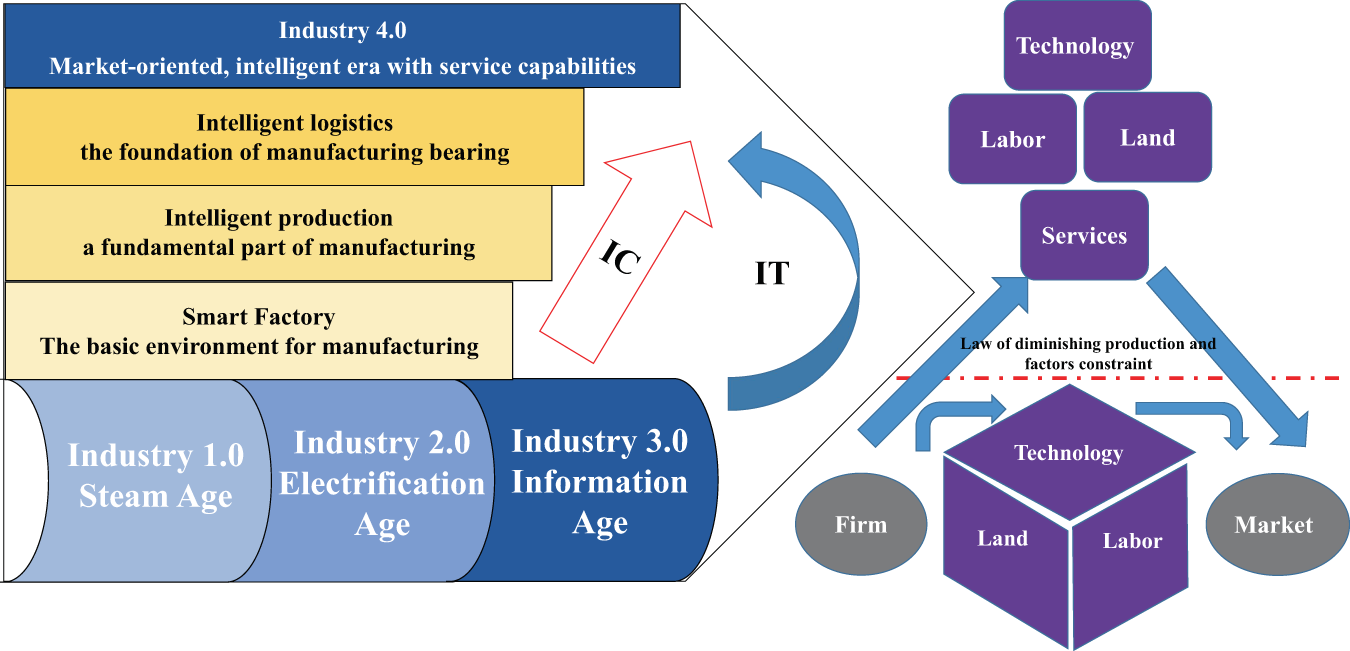
(2025) Evolution of Industrial Phases and Concepts of Industry 4.0. https://media.springernature.com/full/springer-static/image/art%3A10.1057%2Fs41599-022-01409-9/MediaObjects/41599_2022_1409_Fig1_HTML.png
(2025) Visual Representation of Digital Technology and Security. https://quixy.com/wp-content/uploads/2023/04/Digital-transformation.png
(2025) Flowchart of Home Furnishing Market Dynamics in Singapore. https://media.springernature.com/m685/springer-static/image/art%3A10.1057%2Fs41599-022-01102-x/MediaObjects/41599_2022_1102_Fig1_HTM L.png
(2025) Framework for Understanding Digital Transformation Enablers and Risks. https://media.springernature.com/lw1200/springer-static/image/art%3A10.1007%2Fs43039-023-00063-6/MediaObjects/43039_2023_63_Fig1_HTML.png
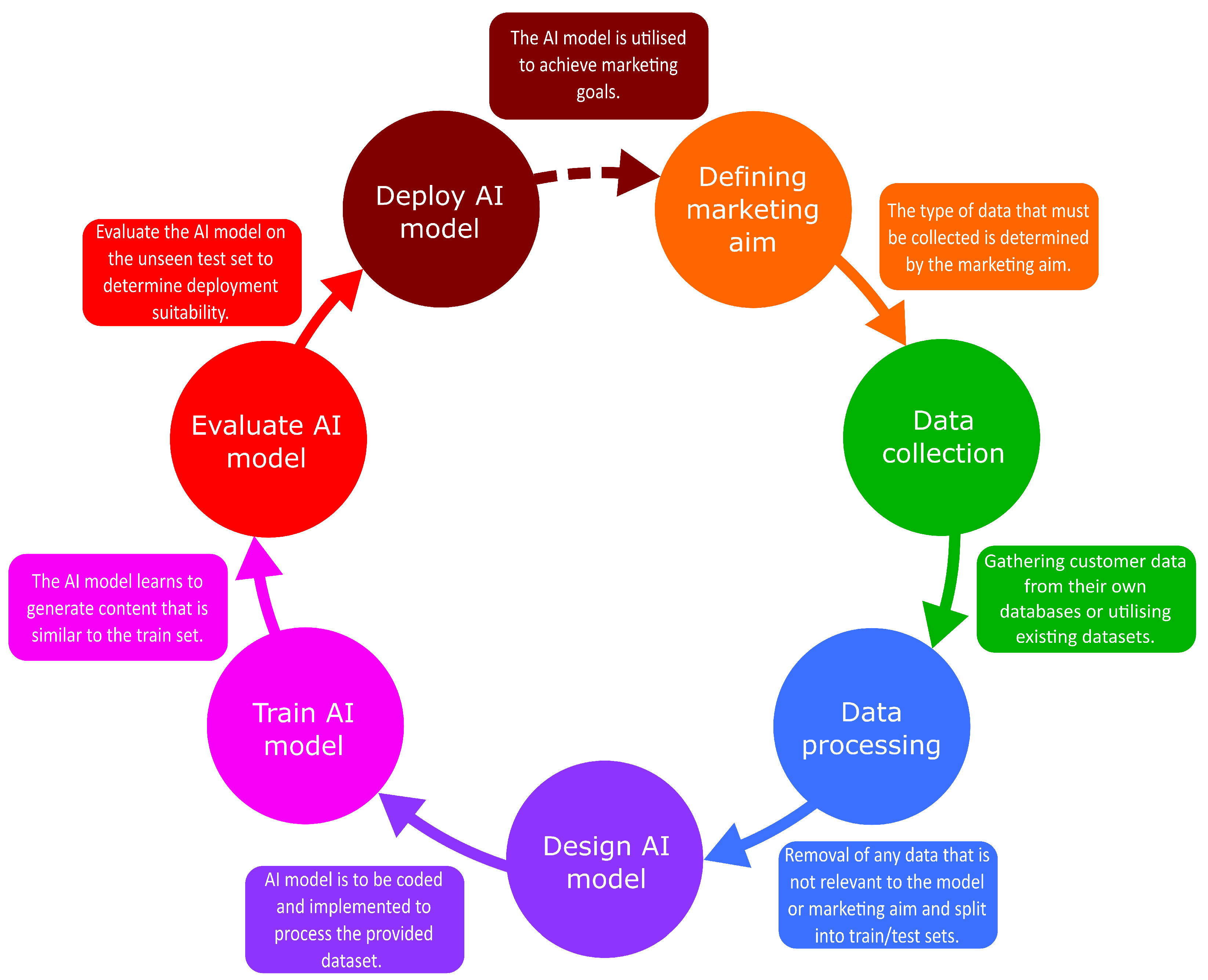
(2025) Flowchart of AI Model Development for Marketing Objectives. https://www.mdpi.com/computers/computers-13-00168/article_deploy/html/images/computers-13-00168-g001.png
Flowchart illustrating the relationship between Industry 4.0 technologies and marketing strategies for competitive advantage. pub.mdpi-res.com
Downloads
Published
Issue
Section
License
Copyright (c) 2025 Authors and Global Journals Private Limited

This work is licensed under a Creative Commons Attribution 4.0 International License.